The observatory has hosted a variety of lectures. You can view the video of a presentation by clicking on the speaker’s image. Please help us continue this series online by donating to the observatory. View the event calendar for upcoming lectures as well as other observatory activities.
Walt Pickut & Tom Traub – The Onslaught of Extraterrestrial Objects. There has been a lot of activity in our solar system with solar flares and visits of Near Earth Objects (NEOs). Observatory board members, Walt Pickut and Tom Traub joined forces to talk about these recent events in the context of Earth being a “target.” Sunspot activity has produced flares and storms generating spectacular auroras as well as causing partial radio disruptions around the world. Tom Traub discusses the Sun, recent solar events and possible implications. NEOs such as comets, asteroids, and meteors are objects that have been nudged by the gravitational attraction of nearby planets into orbits that allow them to enter the Earth’s neighborhood. Walt talks about the different types of NEOs, where they come from, how they’ve impacted the Earth, and possible future dangers. © 2024

Mike Stafford – The Secret Life of the Sun: An Introduction to Solar Physics. The Sun is a marvel of physics. At its core, under immense pressure and scorching temperatures, hydrogen atoms undergo nuclear fusion releasing a tremendous amount of energy. This energy slowly makes its way outward, battling its way through layers of hot plasma, before radiating out into space as light and heat. The Sun’s influence extends far beyond its visible surface. Solar winds, a stream of charged particles, whip out from the Sun impacting Earth. Powerful corona mass ejections can disrupt satellites and power grids here on Earth. Semi-retired physics professor, Mike Stafford, returned to the Martz-Kohl Observatory to help us understand solar physics in a non-mathematical way while sharing the wonder that is our closest star. © 2024
Walt Pickut – Are We Really Alone? The Search Has Only Begun! The search for extraterrestrial intelligence (SETI) is ongoing. The SETI Institute remains active in the field, using powerful telescopes and managing various projects. Unidentified Flying Objects (UFOs) are no more; we now have Unidentified Anomalous Phenomena (UAP). Walt Pickut discusses the latest Pentagon report on UAP, published in January 2024, as well as some take-aways from a public meeting held by NASA, last year. He also leads the audience in assigning values to the Drake Equation, a framework for considering the factors that might influence the possibility of extraterrestrial life. Walt Pickut is a scientific author and the author of the true-story, “The First Counterspy.” He is the perfect person to present recent factual findings, as well as a bit of speculation. Walt says, “the answer is still out there!” © 2024
Dr. John Mather – Opening the Infrared Treasure Chest with the James Webb Space Telescope. Nobel Prize Winner in Physics, Dr. John C. Mather, shows how the James Webb Space Telescope (JWST) was built, what we have found, and what we hope to find. JWST was commissioned in July 2022. With its cameras and spectrometers, JWST is already producing magnificent images of galaxies, active galactic nuclei, star-forming regions, and planets. Scientists are hunting for some of the first objects that formed after the Big Bang, the first black holes (primordial or formed in galaxies), and beginning to observe the growth of galaxies, the formation of stars and planetary systems, and individual exoplanets. Dr. Mather is a Senior Astrophysicist and the Senior Project Scientist Emeritus for the JWST at NASA’s Goddard Space Flight Center. © 2024
Tom Traub – Get Ready for the Total Solar Eclipse. NASA Eclipse Ambassador and experienced amateur astronomer, Tom Traub, returns to the observatory with an updated presentation that provides a historical view of solar eclipses and explains how and why eclipses happen and what you can expect to experience with the upcoming Total Solar Eclipse on April 8, 2024 in Western New York and Northwest Pennsylvania. Tom is Vice President of the Marshal Martz Memorial Astronomical Association, Inc. (MMMAA), the nonprofit organization that operates the Martz-Kohl Observatory. Tom is an avid eclipse “chaser” and says, “I saw my first Solar Eclipse on March 7, 1970. I have seen 4 Total, 1 Hybrid, 3 Annular and 5 Partial Solar Eclipses.” © 2024
Kate LaRue – New York Times Magazine and the James Webb Telescope. Kate LaRue, digital art director for the New York Times Magazine, briefly walks through the history of the New York Times, explains how one ambitious article — Snowfall — changed the course of interactive storytelling- and Kate says her own career. She then does a case study of how one of the magazine’s latest features, “A Beginner’s Guide to Looking at the Universe” came to be. Along the way, Kate shows how the NY Times has historically spent considerable page space on astronomy and space exploration events. A few discoveries of the James Webb Telescope are presented, demonstrating that the more we learn, the more there is to learn. © 2024
Mike Stafford – The Origin and Evolution of Galaxies. The universe is populated by a vast arrangement of large scale structures consisting of stars and gas and dust called galaxies. This talk considers what occurred “shortly” after the Big Bang, giving the theory of where these structures came from and how they have changed over time. Mike Stafford discusses the properties of galaxies and why they have those properties. Mike is a semi-retired physics instructor who taught at Penn State University full time and Gannon University as an adjunct for 37 years. His primary interest in physics is classical mechanics. Mike is also a licensed airplane pilot with single and multi-engine land certification. © 2023
Steve Conard – Occultation Timing to Determine Asteroid Size & Shape. What is an occultation and how does it help to obtain information about an asteroid? A stellar occultation occurs when the light from a star is blocked by an intervening body (such as a planet, moon, or asteroid) from reaching an observer. Steve Conard describes how amateur astronomers use modest sized telescopes and relatively inexpensive cameras to collect occultation data, along with software tools to predict events and analyze the resulting data. Steve has been an amateur astronomer for more than 50 years. His love of telescope making as a teenager turned into a 40 year career working for the Johns Hopkins University developing optical systems as an optical engineer. © 2023
Dr. Alexandra Yep – Cosmic Collisions: Close Encounters in the Gum Nebula. When stars pass very close to each other, they potentially kick up comets from each other’s Oort clouds and cause heavy bombardment events. A stellar association is a very loose cluster of stars that share a common origin, but have become gravitationally unbound. A collision of stellar associations can serve as a laboratory of close stellar encounters. Dr. Alexandra Yep returns to the observatory to discuss the collision of two stellar associations in the Gum Nebula in the southern sky. A fun fact is that Dr. Yep is a poet turned astronomer – and we coaxed her to share some of her poetry. © 2023
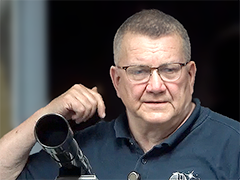
Gary Nelson – Binoculars and Telescopes: Types and Choices. What are some of the different types of binoculars and telescopes? What do all the numbers on binoculars and telescopes mean? What should you look for when buying? There are many considerations when buying something to learn about astronomy and view the night sky. Gary Nelson, licensed optician, former professional telescope dealer, and long-time president at the Martz-Kohl Observatory answers these questions and more in a hands-on presentation. Tom Traub follows the talk with a short discourse on the upcoming total solar eclipse of April 8, 2024. © 2023
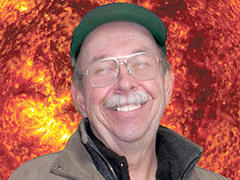
Tom Traub – Get Ready for Upcoming Solar Eclipses. Did you know that a total solar eclipse will be visible in Western New York and Northwest Pennsylvania within the next year – April 8, 2024? Did you know that there are four different types of solar eclipses? Do you know how to safely view a solar eclipse? NASA Eclipse Ambassador and experienced amateur astronomer, Tom Traub provides a historical view of solar eclipses. He also explains how and why eclipses happen and what you can expect to experience. Tom is Vice President of the Marshal Martz Memorial Astronomical Association, Inc. (MMMAA), the nonprofit organization that operates the Martz-Kohl Observatory. © 2023
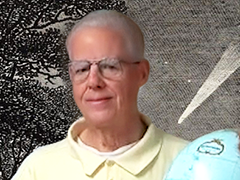
Phil Evans – Astronomy Surrounds Us. Astronomy surrounds us in books, magazines, movies, social media, and in various venues. This interesting and informative talk by long-time Martz-Kohl Observatory member, Phil Evans, was fun for all ages and levels of knowledge of astronomy. Phil walked and talked through time and history, stopping at key points along the way. Phil is a retired county government employee and veteran of the United States Army. He is a student of history and collects stamps, coins and historical related materials. As for astronomy, he enjoys reading about how astronomy has impacted earlier civilizations such as by the appearance of comets and unidentified flying objects. © 2023
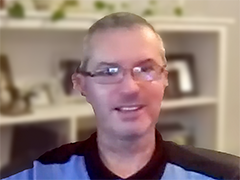
Tim Horvath – Science on Artemis Missions. Artemis, twin sister of the Greek god, Apollo, and goddess of the Moon, personifies our path to the Moon as the name of NASA’s efforts to return to the Moon and beyond. With Artemis missions, NASA will land the first woman on the Moon and use innovative technologies to explore more of the lunar surface than ever before. This presentation by Tim Horvath provides an overview of NASA’s Artemis missions, the spacecraft that will be used, how the missions will be conducted, and some of the Science that will be accomplished. Tim Horvath is the Deputy Manager of the NASA Gateway Program’s Mission Integration & Utilization Office, which is responsible for key Gateway disciplines including mission integration, integrated logistics, utilization/science, and payload operations. © 2023
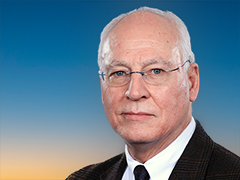
Dr. James Spann – Small Satellites for Big Science. As access to space has become more available to the commercial market, a revolution of using small satellites has taken place. The use of small satellites to conduct research has been embraced by NASA and the National Science Foundation. The symbiotic role of small and large satellites for space exploration is explored using Heliophysics Missions and associated spacecraft as examples. Dr. James F. (Jim) Spann, Jr., is the Heliophysics Division Space Weather Lead at NASA Headquarters. During his 36-year NASA career, he developed, and flew in space, several auroral UV remote sensing instruments, managed the Marshall Space Flight Center’s science research organization, and served as the MSFC Chief Scientist. © 2023


