Roberto Mura
| Type | Open Cluster | Constellation | Vel |
|---|---|---|---|
| Magnitude | 2.5 | Size | 50.0′ |
| Distance | 479 light-years | Best Month | March |
| Visibility | Southern | Difficulty | Easiest (level 1/4) |
| Min. Aperture | naked eye | RA / Dec | 08h 40m 12.0s · -53° 04' 12" |
| Discovered by | Nicolas Louis de Lacaille, 1751 | ||
Roberto Mura
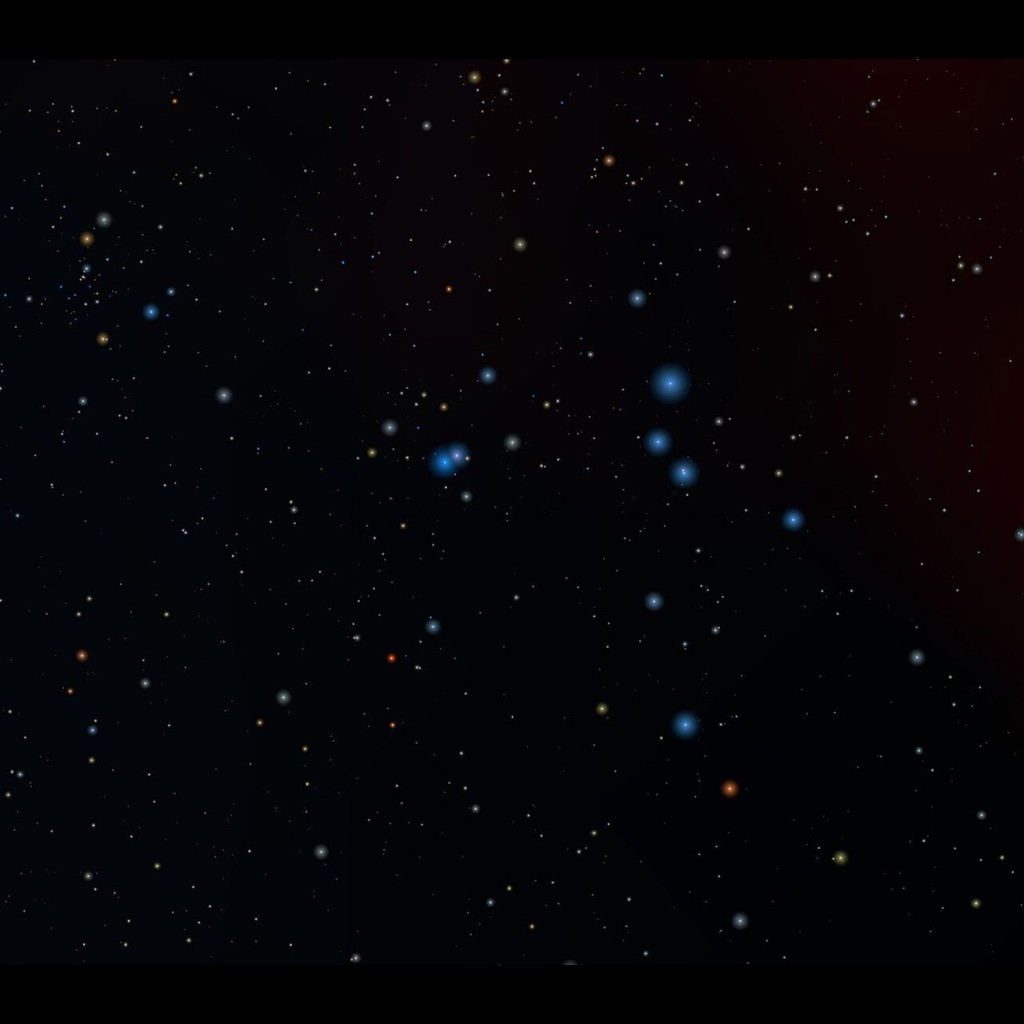
Caldwell 84, also known as **NGC 5286**, is a brilliant globular cluster located Caldwell 85, formally designated as IC 2391, is a brilliant open cluster located approximately 500 light-years away in the constellation Vela. Glowing at a magnitude of 2.5, it is one of the closest and brightest star clusters to Earth, making it a prominent naked-eye landmark for observers in the Southern Hemisphere. The cluster is anchored by its namesake and brightest member, Omicron Velorum, a hot blue-white star that dominates the group's visual identity. While its sparse but bright stellar population often draws comparisons to the northern Pleiades, IC 2391 is a distinct "nursery" of relatively newborn suns, with an estimated age of only 50 million years.
Despite its modern catalog numbers, the cluster has deep historical roots, having been recorded as a "nebulous star" by the Persian astronomer Al-Sufi in the 10th century. Scientifically, it serves as the core of the Argus Association, a group of stars that share a common motion and chemical fingerprint, suggesting they all originated from the same massive molecular cloud. Because it is so spread out across the sky—covering an area twice the diameter of the full moon—it requires a wide field of view to truly appreciate its "splash" of bright, hot stars against the background of the Milky Way.
This specific rendering of the cluster was captured by amateur astrophotographer Roberto Mura. In this image, Mura emphasizes the vivid, "electric" blue of the cluster's youngest members, set against a remarkably clean and deep cosmic backdrop. By balancing the intense luminosity of Omicron Velorum with the fainter peripheral stars, the photograph preserves the natural "open" feel of the cluster. Mura’s processing highlights the clarity of the southern sky, transforming a simple grouping of stars into a glittering "island" that showcases the elegance of stellar birth in our local galactic neighborhood.