ESO - CCA 4.0
| Type | Planetary Nebula | Constellation | Vel |
|---|---|---|---|
| Magnitude | 8.2 | Size | 1.4′ |
| Distance | 2,000 light-years | Best Month | March |
| Visibility | Southern | Difficulty | Easy (level 2/4) |
| Min. Aperture | binoculars | RA / Dec | 10h 07m 37.2s · -40° 26' 24" |
| Discovered by | John Herschel, 1835 | ||
ESO - CCA 4.0
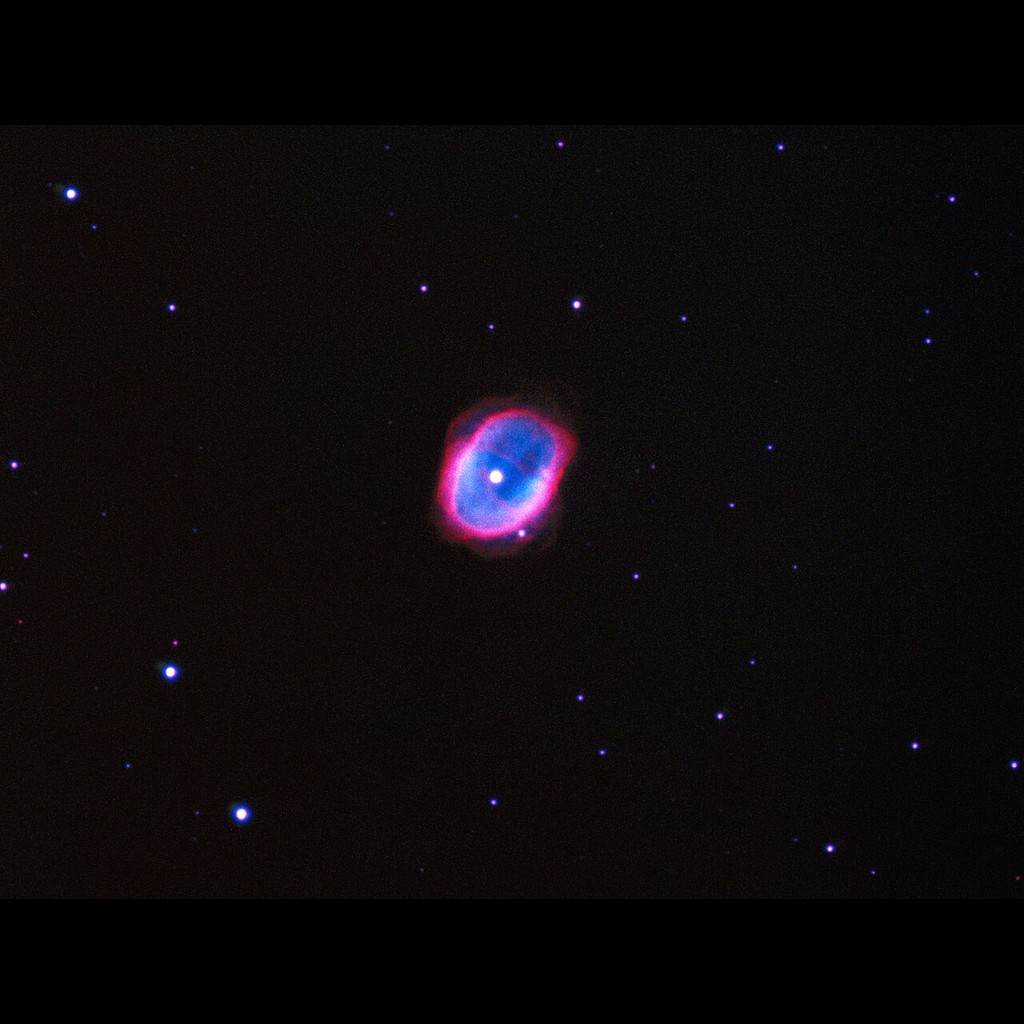
Caldwell 74, widely known as the Southern Ring Nebula or the Eight-Burst Nebula, is a stunning planetary nebula located approximately 2,000 light-years away in the constellation Vela. It is one of the closest examples of its kind to Earth, appearing as a brilliant, expanding shell of gas and dust. Despite the name, these phenomena have nothing to do with planets; the term "planetary nebula" was coined by early astronomers because the objects’ rounded, disc-like shapes through small telescopes reminded them of the distant planets in our Solar System.
The nebula is the glowing byproduct of a star's final life stages. As a sun-like star nears the end of its life, it sheds its outer gaseous layers into space in a series of dramatic pulses. The remaining white dwarf core, which is incredibly hot, emits intense ultraviolet radiation that ionizes the surrounding shell of expelled gas, causing it to glow with vibrant colors. In the case of NGC 3132, the "Eight-Burst" nickname refers to its complex, layered appearance, which suggests that the central star may have undergone several distinct episodes of mass loss, creating multiple interlocking shells.
Detailed observations, particularly from space-based telescopes like Hubble and James Webb, reveal that the system actually contains two stars at its center. Only one of these—the fainter, hotter member—is responsible for creating the nebula, while its brighter companion serves to sculpt the expanding gas into its distinctive, intricate shape. For your database, C74 stands as a premier example of stellar evolution, illustrating the beautiful but ephemeral transition of a star from a red giant into a white dwarf, leaving behind a glowing cosmic shroud that will eventually dissipate into the interstellar medium.