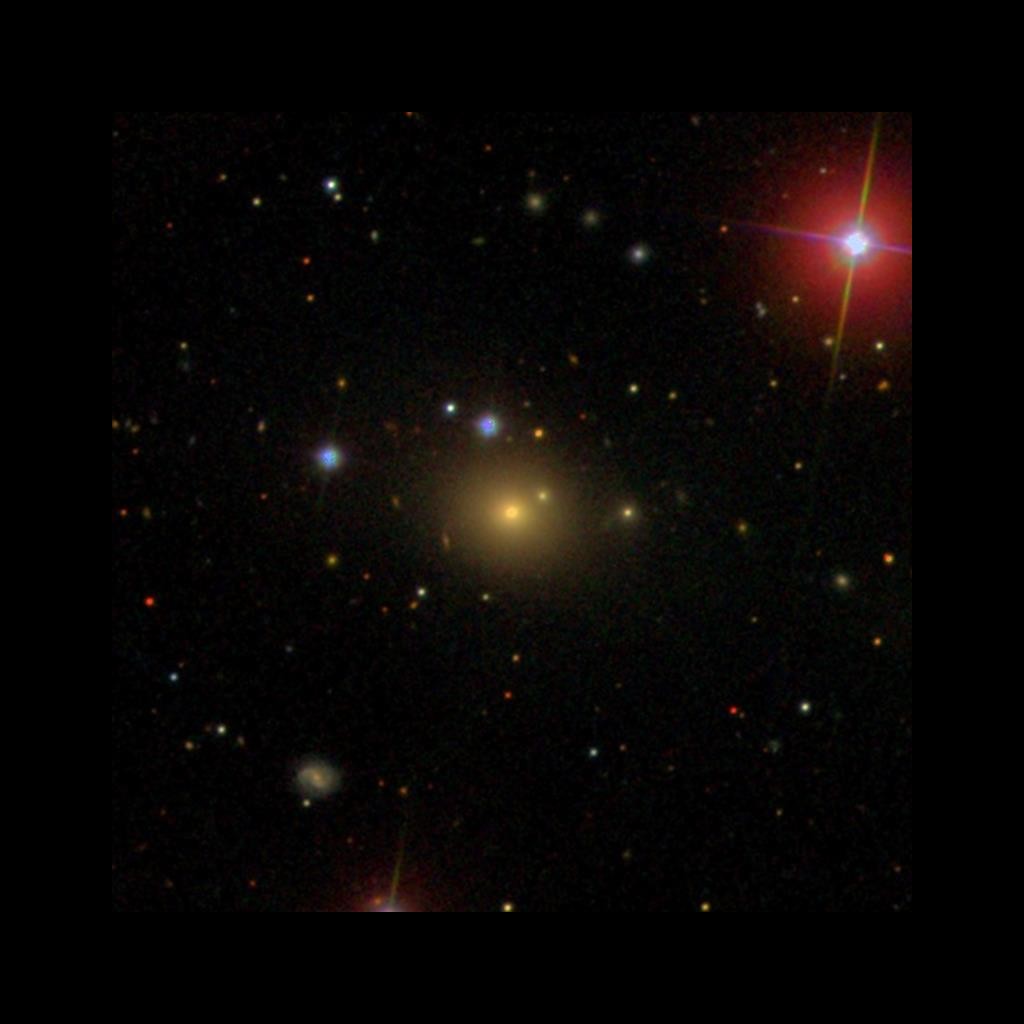
Sloan Digital Sky Survey
| Type | Planetary Nebula | Constellation | Sco |
|---|---|---|---|
| Magnitude | 9.6 | Size | 0.8′ |
| Distance | 3,400 light-years | Best Month | July |
| Visibility | Southern | Difficulty | Moderate (level 3/4) |
| Min. Aperture | 3in | RA / Dec | 17h 13m 37.2s · -37° 06' 00" |
| Discovered by | Edward Emerson Barnard, 1880 | ||
Sloan Digital Sky Survey
Caldwell 69, famously known as the Bug Nebula or the Butterfly Nebula, is one of the most complex and visually striking planetary nebulae in the Milky Way. Located roughly 3,800 light-years away in the constellation Scorpius, its "wings" are actually vast shells of gas being ejected by a dying star and heated to temperatures exceeding 20,000°C. The structure spans over two light-years, which is about half the distance from our Sun to the nearest star, Proxima Centauri.
The central star of NGC 6302 is one of the hottest known stars in the galaxy, with a surface temperature of approximately 250,000°C. Despite its extreme heat, the star remains hidden from direct optical view behind a dense torus of dust and ice that encircles the nebula’s "waist." This thick disk of material acts like a nozzle, constricting the outward flow of gas into the dramatic, bipolar lobes that give the nebula its distinctive lepidopteran appearance.
This sky image was obtained via the Sloan Digital Sky Survey (SDSS), DR14, using the SciServer platform. The 4' × 4' field of view, rendered at a resolution of 0.3" per pixel with North oriented upward, captures the intricate filaments and ionization fronts within the nebular gas. The SDSS data reveals the diverse chemical composition of the nebula, which is unusually rich in silicates, crystalline ice, and hydrocarbons, marking it as a unique laboratory for studying the final evolutionary stages of high-mass stars.