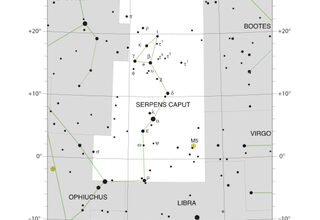
 IAU Chart
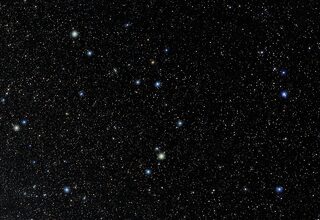 NOIRLab Images
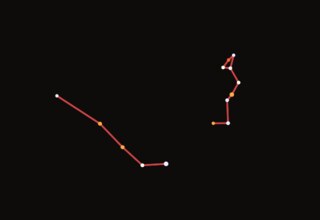 Stars and Sticks
| Abbreviation | Ser |
|---|---|
| Meaning | Serpent |
| Pronunciation Guide is based on “Pronouncing Astronomical Names,” published in 1943 by the American Astronomical Society. | SER-punz |
| Genitive The genitive is the Latin possessive form used in star names. For example, Alpha Orionis means “the Alpha of Orion.” | sur-PEN-tis |
| Best Month | July |
| Visibility | Global |
| Origin | AncientThese figures are rooted in the classical Greek and Mesopotamian traditions cataloged by Ptolemy in the 2nd century AD. |
| Author | PtolemyPtolemy, a 2nd-century Greco-Egyptian astronomer, cataloged the 48 classical constellations in his landmark work, the Almagest. These form the core of the 88 modern constellations recognized today. |
| Type | constellation |
| Difficulty | Challenging |
| Description | The Serpent is unique among the 88 constellations as the only one divided into two completely separate parts — Serpens Caput (the Head) to the west and Serpens Cauda (the Tail) to the east, with Ophiuchus splitting them apart in the middle. Together they form the healing serpent coiled around the god Asclepius. The tail section contains the Eagle Nebula (M16) — made famous by the Hubble Space Telescope's iconic 'Pillars of Creation' image of towering columns of gas and dust where new stars are actively forming, about 7,000 light-years away and one of the most recognizable astronomical images ever taken. |
Click a thumbnail to view full-size. Plain and Annotated versions available on the image page.
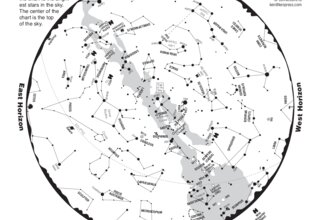
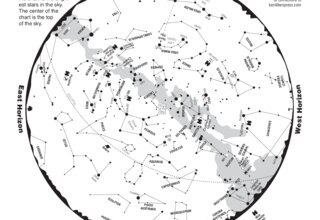
Monthly sky charts courtesy of What's Out Tonight? — Copyright ©2026 Ken Graun. Star charts are optimized for mid-latitudes of the Northern Hemisphere. Click a chart to view or download the PDF. For guidance on using the chart, or to purchase a planisphere and astronomy books, visit kenpress.com.
Images: NOIRLab/NSF/AURA/E. Slawik · IAU and Sky & Telescope · Stellarium — Full credits →