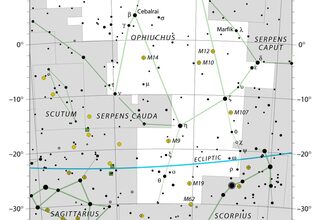
 IAU Chart
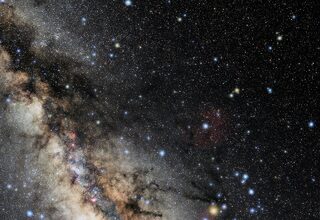 NOIRLab Images
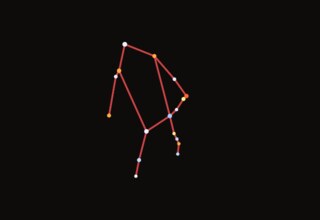 Stars and Sticks
| Abbreviation | Oph |
|---|---|
| Meaning | Serpent Holder |
| Pronunciation Guide is based on “Pronouncing Astronomical Names,” published in 1943 by the American Astronomical Society. | OFF-ee-YOO-cuss |
| Genitive The genitive is the Latin possessive form used in star names. For example, Alpha Orionis means “the Alpha of Orion.” | of-ee-YOO-kye |
| Best Month | July |
| Visibility | Global |
| Origin | AncientThese figures are rooted in the classical Greek and Mesopotamian traditions cataloged by Ptolemy in the 2nd century AD. |
| Author | PtolemyPtolemy, a 2nd-century Greco-Egyptian astronomer, cataloged the 48 classical constellations in his landmark work, the Almagest. These form the core of the 88 modern constellations recognized today. |
| Type | constellation |
| Difficulty | Moderate |
| Description | The Serpent Bearer represents Asclepius, the son of Apollo and the first great physician, who became so skilled at healing that he learned to raise the dead. Pluto complained to Zeus that the underworld was being deprived of souls, and Zeus struck Asclepius down with a thunderbolt before placing him among the stars. Ophiuchus straddles the ecliptic — the Sun passes through it for 19 days each November — making it astronomically a 'thirteenth zodiac constellation' though never part of the horoscope tradition. The constellation also contains Barnard's Star, the second closest star system to the Sun at just 5.96 light-years — and the star with the largest proper motion in the sky, visibly shifting its position relative to background stars over human lifetimes. |
Click a thumbnail to view full-size. Plain and Annotated versions available on the image page.
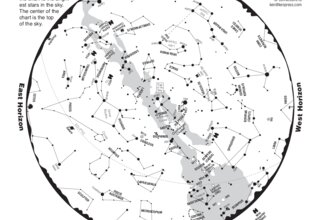
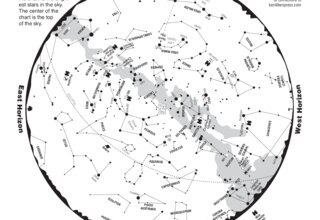
Monthly sky charts courtesy of What's Out Tonight? — Copyright ©2026 Ken Graun. Star charts are optimized for mid-latitudes of the Northern Hemisphere. Click a chart to view or download the PDF. For guidance on using the chart, or to purchase a planisphere and astronomy books, visit kenpress.com.
Images: NOIRLab/NSF/AURA/E. Slawik · IAU and Sky & Telescope · Stellarium — Full credits →