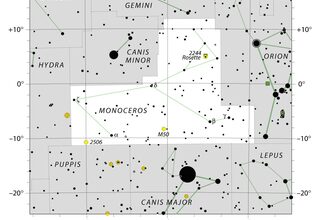
 IAU Chart
 NOIRLab Images
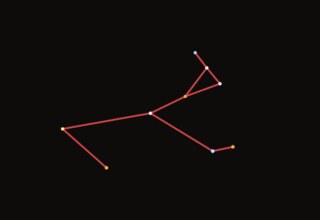 Stars and Sticks
| Abbreviation | Mon |
|---|---|
| Meaning | Unicorn |
| Pronunciation Guide is based on “Pronouncing Astronomical Names,” published in 1943 by the American Astronomical Society. | mon-OSS-er-uss |
| Genitive The genitive is the Latin possessive form used in star names. For example, Alpha Orionis means “the Alpha of Orion.” | mon-oh-ser-OH-tis |
| Best Month | February |
| Visibility | Global |
| Origin | ModernAdded between the 17th and 18th centuries by astronomers like Hevelius or Plancius to define faint star clusters ignored by the ancients. |
| Author | PlanciusA Dutch cartographer who mapped southern stars and added biblical or symbolic figures like the Dove and the Unicorn. |
| Type | constellation |
| Difficulty | Expert |
| Description | The Unicorn strides through the winter Milky Way between Orion's two Dogs in one of the richest regions of sky despite being nearly invisible to the naked eye. Introduced by Petrus Plancius around 1612, it is associated with the biblical unicorn rather than classical mythology. It contains spectacular objects for telescope users — the Rosette Nebula, a vast circular cloud of glowing gas about 5,000 light-years away forming new stars; and Beta Monocerotis — a triple star system described by early observers as 'the most beautiful object in the heavens,' three blue-white stars easily split in a small telescope and one of the finest triple systems in the sky. |
Click a thumbnail to view full-size. Plain and Annotated versions available on the image page.
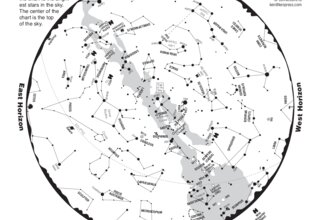
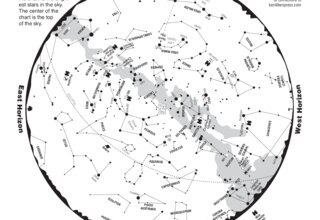
Monthly sky charts courtesy of What's Out Tonight? — Copyright ©2026 Ken Graun. Star charts are optimized for mid-latitudes of the Northern Hemisphere. Click a chart to view or download the PDF. For guidance on using the chart, or to purchase a planisphere and astronomy books, visit kenpress.com.
Images: NOIRLab/NSF/AURA/E. Slawik · IAU and Sky & Telescope · Stellarium — Full credits →