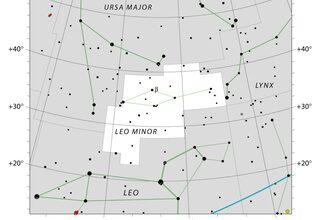
 IAU Chart
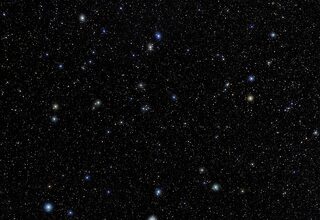 NOIRLab Images
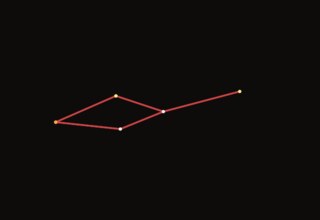 Stars and Sticks
| Abbreviation | LMi |
|---|---|
| Meaning | Lesser Lion |
| Pronunciation Guide is based on “Pronouncing Astronomical Names,” published in 1943 by the American Astronomical Society. | LEE-oh MY-ner |
| Genitive The genitive is the Latin possessive form used in star names. For example, Alpha Orionis means “the Alpha of Orion.” | lee-OH-nis my-NOR-is |
| Best Month | April |
| Visibility | Northern |
| Origin | ModernAdded between the 17th and 18th centuries by astronomers like Hevelius or Plancius to define faint star clusters ignored by the ancients. |
| Author | HeveliusA Polish astronomer known as the "founder of lunar topography" who added several "filler" constellations using high-precision instruments. |
| Type | constellation |
| Difficulty | Expert |
| Description | The Lesser Lion was added by Johannes Hevelius in 1687 between Ursa Major and Leo, filling a region of sky he felt had no ancient constellation. It has no mythological story and is entirely the product of Hevelius's desire to organize unmapped sky. Uniquely, none of the constellation's stars ever received an official Bayer designation — Hevelius never assigned Greek letters to its stars — making the brightest star, 46 Leonis Minoris, a Flamsteed number holder rather than an Alpha. That star is an orange giant about 98 light-years away. The constellation serves as a curiosity of astronomical history — a reminder that the modern sky atlas was gradually assembled over centuries. |
Click a thumbnail to view full-size. Plain and Annotated versions available on the image page.
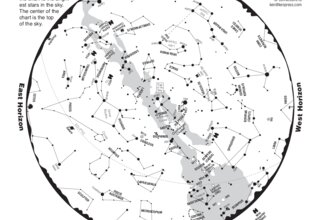
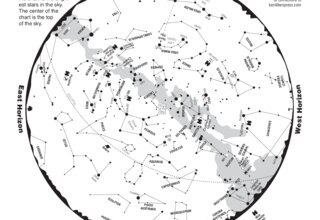
Monthly sky charts courtesy of What's Out Tonight? — Copyright ©2026 Ken Graun. Star charts are optimized for mid-latitudes of the Northern Hemisphere. Click a chart to view or download the PDF. For guidance on using the chart, or to purchase a planisphere and astronomy books, visit kenpress.com.
Images: NOIRLab/NSF/AURA/E. Slawik · IAU and Sky & Telescope · Stellarium — Full credits →