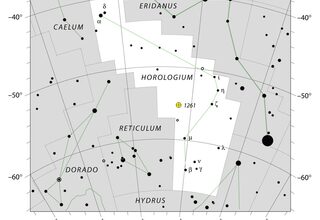
 IAU Chart
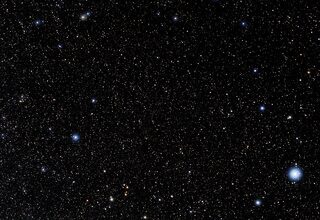 NOIRLab Images
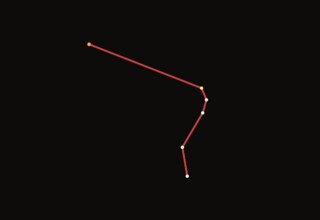 Stars and Sticks
| Abbreviation | Hor |
|---|---|
| Meaning | Clock |
| Pronunciation Guide is based on “Pronouncing Astronomical Names,” published in 1943 by the American Astronomical Society. | HOR-oh-LO-jee-um |
| Genitive The genitive is the Latin possessive form used in star names. For example, Alpha Orionis means “the Alpha of Orion.” | hor-oh-LOH-jee-eye |
| Best Month | December |
| Visibility | Southern |
| Origin | EnlightenmentNamed by Nicolas-Louis de Lacaille in the 1750s; these represent the scientific and artistic tools of the "Age of Reason". |
| Author | LacailleKnown as the "Father of Southern Astronomy," he mapped nearly 10,000 stars and created 14 new constellations in the southern hemisphere. |
| Type | constellation |
| Difficulty | Expert |
| Description | The Pendulum Clock was named by Lacaille to honor Christiaan Huygens, the Dutch scientist who invented the pendulum clock in 1656, revolutionizing accurate timekeeping and navigation. It sits in a faint area of the southern sky between Eridanus and the bright star Achernar. Despite its obscurity, it contains the Horologium Supercluster — one of the largest known structures in the observable universe, a vast concentration of galaxy clusters stretching roughly 550 million light-years across and about 700 million light-years from Earth. The brightest star, Alpha Horologii, is an orange giant about 115 light-years away. |
Click a thumbnail to view full-size. Plain and Annotated versions available on the image page.
Images: NOIRLab/NSF/AURA/E. Slawik · IAU and Sky & Telescope · Stellarium — Full credits →