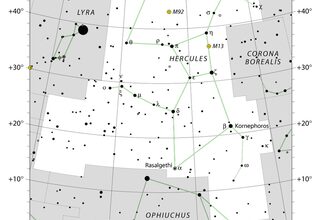
 IAU Chart
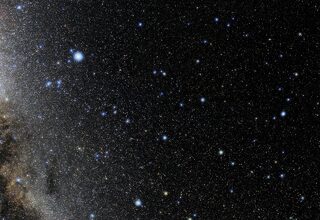 NOIRLab Images
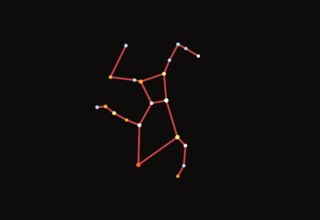 Stars and Sticks
| Abbreviation | Her |
|---|---|
| Meaning | Hercules |
| Pronunciation Guide is based on “Pronouncing Astronomical Names,” published in 1943 by the American Astronomical Society. | HER-kyoo-leez |
| Genitive The genitive is the Latin possessive form used in star names. For example, Alpha Orionis means “the Alpha of Orion.” | HUR-kyuh-lis |
| Best Month | July |
| Visibility | Northern |
| Origin | AncientThese figures are rooted in the classical Greek and Mesopotamian traditions cataloged by Ptolemy in the 2nd century AD. |
| Author | PtolemyPtolemy, a 2nd-century Greco-Egyptian astronomer, cataloged the 48 classical constellations in his landmark work, the Almagest. These form the core of the 88 modern constellations recognized today. |
| Type | constellation |
| Difficulty | Moderate |
| Description | The greatest hero of Greek mythology is depicted kneeling in the sky with one foot on the head of the dragon Draco, club raised, the skin of the Nemean Lion over his arm. He faces away from us, giving the constellation its archaic name 'the Kneeler.' Hercules performed twelve legendary labors — slaying the Hydra, capturing Cerberus, and cleaning the Augean stables — and his constellation is the fifth largest in the sky. The jewel of the constellation is the Great Hercules Cluster (M13) — one of the finest globular clusters in the northern sky, containing around 300,000 stars packed into a sphere 145 light-years across, some 25,000 light-years away. |
Click a thumbnail to view full-size. Plain and Annotated versions available on the image page.
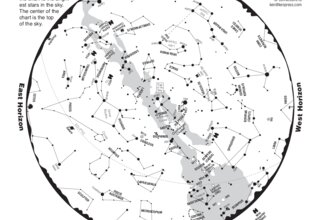
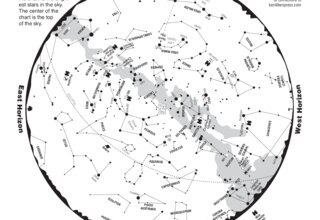
Monthly sky charts courtesy of What's Out Tonight? — Copyright ©2026 Ken Graun. Star charts are optimized for mid-latitudes of the Northern Hemisphere. Click a chart to view or download the PDF. For guidance on using the chart, or to purchase a planisphere and astronomy books, visit kenpress.com.
Images: NOIRLab/NSF/AURA/E. Slawik · IAU and Sky & Telescope · Stellarium — Full credits →