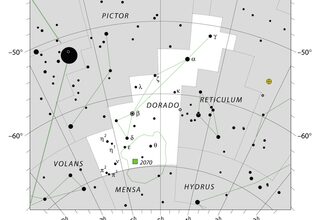
 IAU Chart
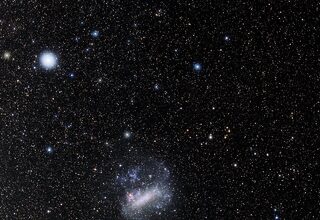 NOIRLab Images
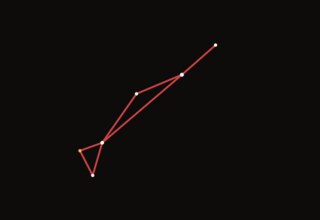 Stars and Sticks
| Abbreviation | Dor |
|---|---|
| Meaning | Dolphinfish |
| Pronunciation Guide is based on “Pronouncing Astronomical Names,” published in 1943 by the American Astronomical Society. | duh-RAH-doe |
| Genitive The genitive is the Latin possessive form used in star names. For example, Alpha Orionis means “the Alpha of Orion.” | duh-RAH-dus |
| Best Month | January |
| Visibility | Southern |
| Origin | ExplorationCreated by 16th-century Dutch navigators (Keyser & de Houtman) to fill the blank spaces of the southern sky during their voyages to the East Indies. |
| Author | Keyser & de HoutmanDutch explorers whose southern star observations during the first Dutch expedition to the East Indies provided the data for 12 new constellations. |
| Type | constellation |
| Difficulty | Challenging |
| Description | The Dolphinfish — also known as Mahi-mahi — is a spectacularly colored tropical fish of the open ocean, one of the fastest in the sea, encountered by Dutch navigators Keyser and de Houtman during their 1590s voyages. Within the constellation's borders lies the Large Magellanic Cloud — the largest satellite galaxy of the Milky Way, about 160,000 light-years away and visible to the naked eye as a detached patch of sky from the southern hemisphere. The LMC contains the Tarantula Nebula (30 Doradus) — the largest and most active star-forming region in our entire Local Group of galaxies, so vast that if placed at the Orion Nebula's distance it would cast shadows on Earth. |
Click a thumbnail to view full-size. Plain and Annotated versions available on the image page.
Images: NOIRLab/NSF/AURA/E. Slawik · IAU and Sky & Telescope · Stellarium — Full credits →