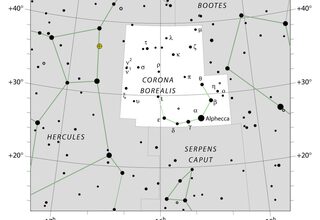
 IAU Chart
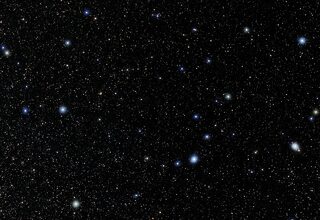 NOIRLab Images
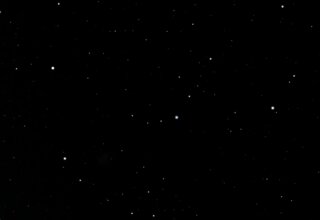 Stellarium Images
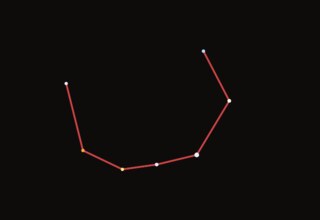 Stars and Sticks
| Abbreviation | CrB |
|---|---|
| Meaning | Northern Crown |
| Pronunciation Guide is based on “Pronouncing Astronomical Names,” published in 1943 by the American Astronomical Society. | co-RO-nuh bore-ee-AL-iss |
| Genitive The genitive is the Latin possessive form used in star names. For example, Alpha Orionis means “the Alpha of Orion.” | kuh-ROH-nee bor-ee-AL-is |
| Best Month | July |
| Visibility | Northern |
| Origin | AncientThese figures are rooted in the classical Greek and Mesopotamian traditions cataloged by Ptolemy in the 2nd century AD. |
| Author | PtolemyPtolemy, a 2nd-century Greco-Egyptian astronomer, cataloged the 48 classical constellations in his landmark work, the Almagest. These form the core of the 88 modern constellations recognized today. |
| Type | constellation |
| Difficulty | Easy |
| Description | The Northern Crown is one of the most elegant small constellations — a perfect arc of stars forming a delicate tiara shape that has enchanted observers for millennia. In Greek myth it is the golden crown given to Ariadne by Dionysus as a wedding gift after Theseus abandoned her on the island of Naxos; when she died Dionysus threw the crown into the sky where it became a circle of stars. The constellation is home to one of the most remarkable variable stars — R Coronae Borealis, which normally shines at magnitude 6 but sporadically and unpredictably plunges to magnitude 14 as clouds of carbon soot condense around it, appearing to mysteriously 'disappear' from the sky without warning. |
Click a thumbnail to view full-size. Plain and Annotated versions available on the image page.
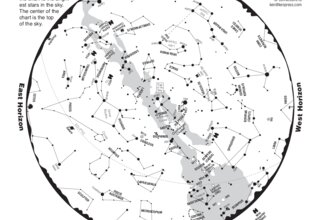
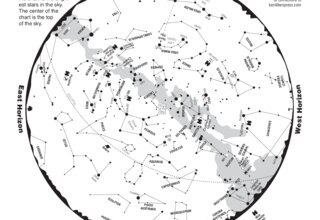
Monthly sky charts courtesy of What's Out Tonight? — Copyright ©2026 Ken Graun. Star charts are optimized for mid-latitudes of the Northern Hemisphere. Click a chart to view or download the PDF. For guidance on using the chart, or to purchase a planisphere and astronomy books, visit kenpress.com.
Images: NOIRLab/NSF/AURA/E. Slawik · IAU and Sky & Telescope · Stellarium — Full credits →