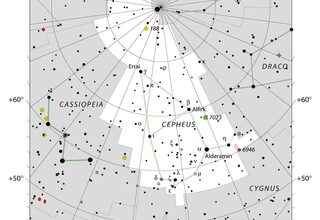
 IAU Chart
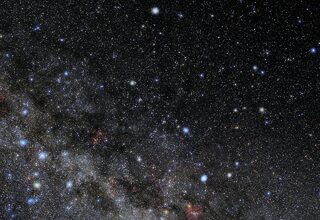 NOIRLab Images
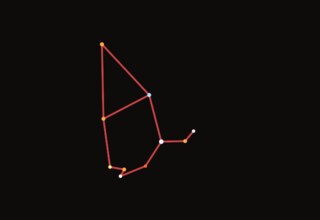 Stars and Sticks
| Abbreviation | Cep |
|---|---|
| Meaning | King of Ethiopia |
| Pronunciation Guide is based on “Pronouncing Astronomical Names,” published in 1943 by the American Astronomical Society. | SEE-fyoos |
| Genitive The genitive is the Latin possessive form used in star names. For example, Alpha Orionis means “the Alpha of Orion.” | SEE-fee-eye |
| Best Month | November |
| Visibility | Northern |
| Origin | AncientThese figures are rooted in the classical Greek and Mesopotamian traditions cataloged by Ptolemy in the 2nd century AD. |
| Author | PtolemyPtolemy, a 2nd-century Greco-Egyptian astronomer, cataloged the 48 classical constellations in his landmark work, the Almagest. These form the core of the 88 modern constellations recognized today. |
| Type | constellation |
| Difficulty | Moderate |
| Description | The King of Ethiopia stands at the celestial north pole with arms outstretched, his distinctive house-shaped outline recognizable on clear autumn nights. As husband of Cassiopeia and father of Andromeda he was ultimately forced by an oracle to sacrifice his own daughter to appease Poseidon's wrath. Cepheus contains one of the most important stars in all of astronomy — Delta Cephei, a yellow supergiant that pulsates with perfect regularity every 5.37 days. This 'Cepheid variable' became the key to measuring cosmic distances after Henrietta Swan Leavitt discovered the period-luminosity relationship in 1908, revolutionizing our understanding of the scale of the universe. |
Click a thumbnail to view full-size. Plain and Annotated versions available on the image page.
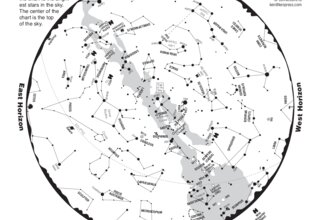
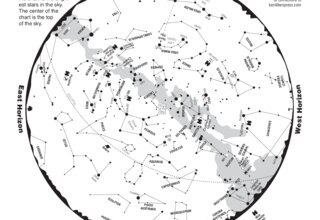
Monthly sky charts courtesy of What's Out Tonight? — Copyright ©2026 Ken Graun. Star charts are optimized for mid-latitudes of the Northern Hemisphere. Click a chart to view or download the PDF. For guidance on using the chart, or to purchase a planisphere and astronomy books, visit kenpress.com.
Images: NOIRLab/NSF/AURA/E. Slawik · IAU and Sky & Telescope · Stellarium — Full credits →