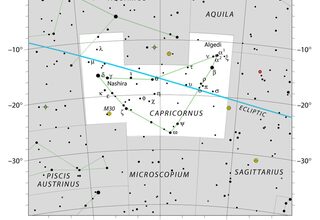
 IAU Chart
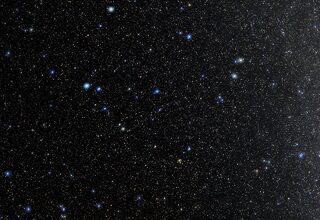 NOIRLab Images
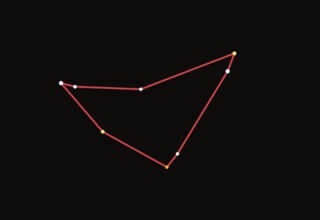 Stars and Sticks
| Abbreviation | Cap |
|---|---|
| Meaning | Sea Goat |
| Pronunciation Guide is based on “Pronouncing Astronomical Names,” published in 1943 by the American Astronomical Society. | CAP-rih-CORN-us |
| Genitive The genitive is the Latin possessive form used in star names. For example, Alpha Orionis means “the Alpha of Orion.” | kap-rih-KOR-nye |
| Best Month | September |
| Visibility | Global |
| Origin | AncientThese figures are rooted in the classical Greek and Mesopotamian traditions cataloged by Ptolemy in the 2nd century AD. |
| Author | PtolemyPtolemy, a 2nd-century Greco-Egyptian astronomer, cataloged the 48 classical constellations in his landmark work, the Almagest. These form the core of the 88 modern constellations recognized today. |
| Type | constellation |
| Difficulty | Moderate |
| Description | One of the oldest constellations, Capricornus has been depicted as a sea-goat — part goat, part fish — since Babylonian times around 2000 BCE. The Greek myth tells of the forest god Pan who, when the monster Typhon attacked the gods at a feast, leapt into the Nile to escape but only managed to partially transform — his lower half becoming a fish while his upper half remained a goat. Zeus found the result so amusing that he immortalized the hybrid creature in the sky. The brightest star, Deneb Algedi (Delta Capricorni), is an eclipsing binary whose companion periodically passes in front of it, causing a regular dip in brightness every 1.02 days. |
Click a thumbnail to view full-size. Plain and Annotated versions available on the image page.
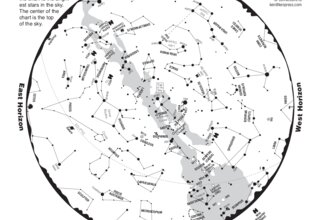
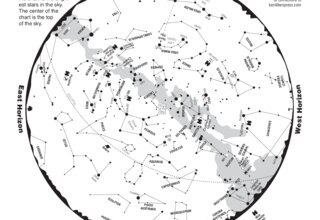
Monthly sky charts courtesy of What's Out Tonight? — Copyright ©2026 Ken Graun. Star charts are optimized for mid-latitudes of the Northern Hemisphere. Click a chart to view or download the PDF. For guidance on using the chart, or to purchase a planisphere and astronomy books, visit kenpress.com.
Images: NOIRLab/NSF/AURA/E. Slawik · IAU and Sky & Telescope · Stellarium — Full credits →