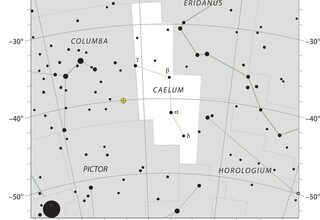
 IAU Chart
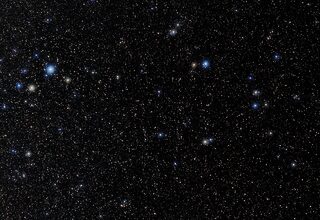 NOIRLab Images
 Stellarium Images
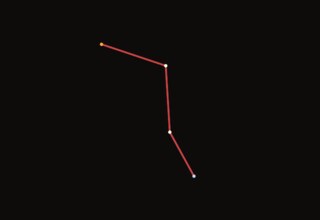 Stars and Sticks
| Abbreviation | Cae |
|---|---|
| Meaning | Chisel |
| Pronunciation Guide is based on “Pronouncing Astronomical Names,” published in 1943 by the American Astronomical Society. | SEE-lum |
| Genitive The genitive is the Latin possessive form used in star names. For example, Alpha Orionis means “the Alpha of Orion.” | SEE-lye |
| Best Month | January |
| Visibility | Southern |
| Origin | EnlightenmentNamed by Nicolas-Louis de Lacaille in the 1750s; these represent the scientific and artistic tools of the "Age of Reason". |
| Author | LacailleKnown as the "Father of Southern Astronomy," he mapped nearly 10,000 stars and created 14 new constellations in the southern hemisphere. |
| Type | constellation |
| Difficulty | Expert |
| Description | One of the faintest and most obscure constellations in the sky, Caelum was created by Lacaille during his 1750s southern sky survey to represent the burin or engraving chisel used by sculptors and artists. It sits in a particularly sparse region between Eridanus and Columba, containing no star brighter than magnitude 4.5. Its very faintness makes it one of the least-observed constellations in the sky. The brightest star, Alpha Caeli, is a double star about 65 light-years away; through a small telescope it resolves into a white primary and a faint red dwarf companion. |
Click a thumbnail to view full-size. Plain and Annotated versions available on the image page.
Images: NOIRLab/NSF/AURA/E. Slawik · IAU and Sky & Telescope · Stellarium — Full credits →